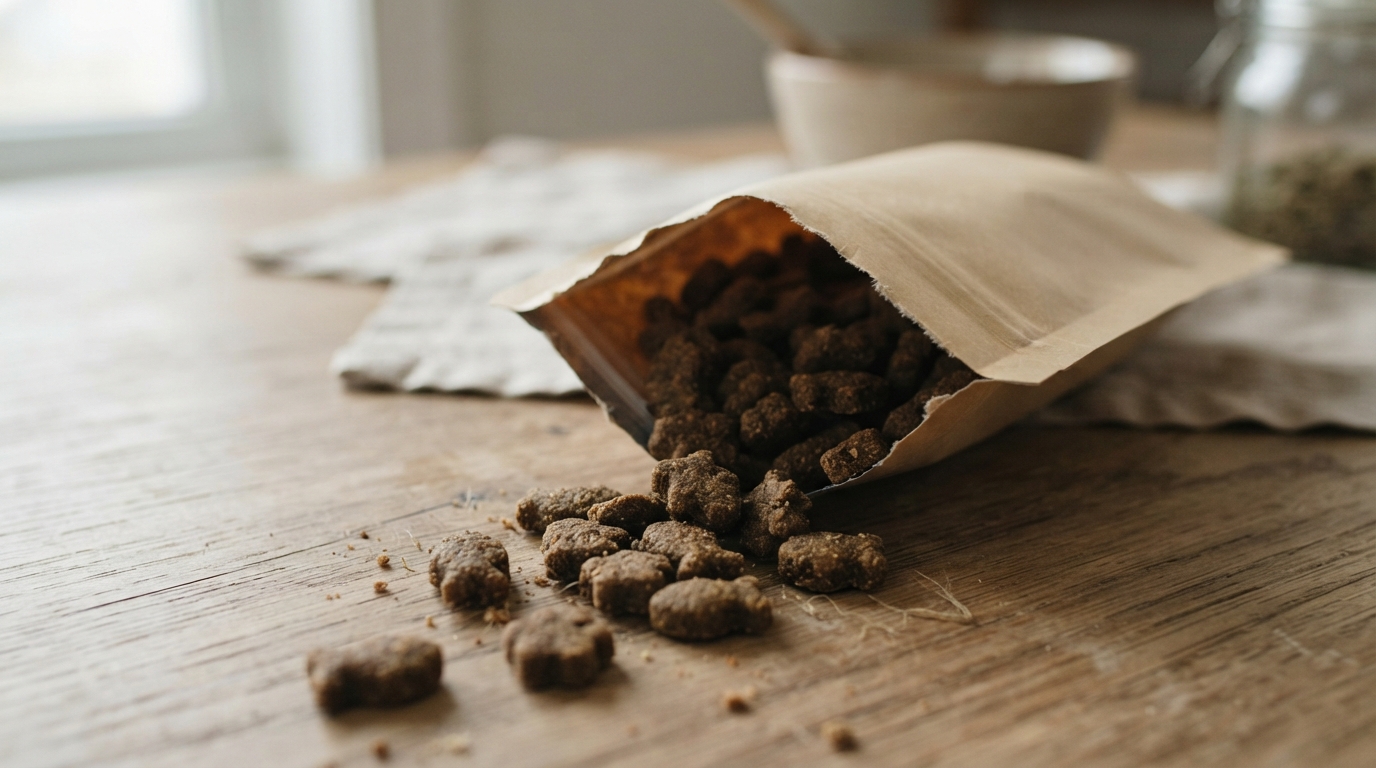
Treats are the most popular way to give a cat hemp extract, but they are far from the only one. Oils, capsules, and non-cannabinoid Holistapet calming products all compete for the same shelf space, and each comes with its own trade-offs around dosing accuracy, palatability, and cost.
Treats vs Oil Tinctures
Oil tinctures, dosed with a dropper directly into the mouth or mixed into food, offer more precise control over milligram amounts than treats do. A dropper can be adjusted to the exact drop for a specific weight, while a treat locks the dose to whatever’s baked into that single piece.
Palatability flips the advantage back toward treats. Hemp oil has a distinct, slightly bitter, grassy taste that many cats reject outright, even when mixed into wet food. Treats mask that flavor with chicken, salmon, or other proteins cats actually want to eat. For an anxious or particular cat, a treat that gets eaten beats a precisely dosed oil that gets left in the bowl.
Treats vs Capsules and Chews
Capsules solve the taste problem differently: the cat never tastes the oil at all, since it’s sealed inside a shell. The catch is that most cats won’t willingly swallow a capsule, which means pilling (physically inserting it) or hiding it inside a pill pocket or food, adding a step most owners skip after a few tries.
Soft chews sit somewhere between a treat and a capsule; they’re flavored like a treat but formulated with more consistent dosing than a baked treat, since the CBD oil is mixed into a uniform paste rather than distributed across dough that bakes unevenly. Some cats treat chews as a treat. Others sniff, reject, and walk away, same as with any new food item.
Treats vs Non-CBD Calming Aids
Not every calming product on the shelf contains CBD at all. Pheromone diffusers, L-theanine supplements, and alpha-casozepine (a milk protein derivative) are common alternatives marketed for similar situational anxiety.
- Pheromone products (synthetic feline facial pheromone) work through scent signaling rather than ingestion, useful for cats that won’t eat anything unfamiliar
- L-theanine, an amino acid found in tea leaves, has some veterinary support for reducing situational stress in cats without sedation
- Alpha-casozepine has research behind it in both cats and dogs for stress-related behaviors
- None of these carry the regulatory uncertainty CBD does, since they aren’t cannabis-derived and face different labeling rules
For owners wary of the current lack of FDA oversight around CBD, these alternatives are worth a look before defaulting to hemp.
Cost Per Dose Breakdown
Pricing varies widely by brand and concentration, but a rough comparison across formats looks like this for a mid-tier product:
| Format | Typical Price Range | Cost Per Dose (5mg) | Dosing Precision |
|---|---|---|---|
| CBD treats | $20–$35 for 30 treats | $0.70–$1.15 | Fixed per treat |
| Oil tincture | $30–$50 per 30ml bottle | $0.50–$0.80 | Adjustable by drop |
| Soft chews | $25–$40 for 30 chews | $0.85–$1.35 | Semi-fixed, more consistent than baked treats |
| Capsules | $25–$45 for 30 capsules | $0.85–$1.50 | Fixed per capsule |
Treats and chews sit in a similar price band, generally above oils because of manufacturing and flavoring costs, but well below the hassle cost of an oil a cat refuses to eat.
Final Thoughts
There’s no single best format across the board. A cat that won’t touch flavored anything may do better on a pheromone diffuser than any CBD product, while a food-motivated cat may take a treat without issue.
